
Introduction
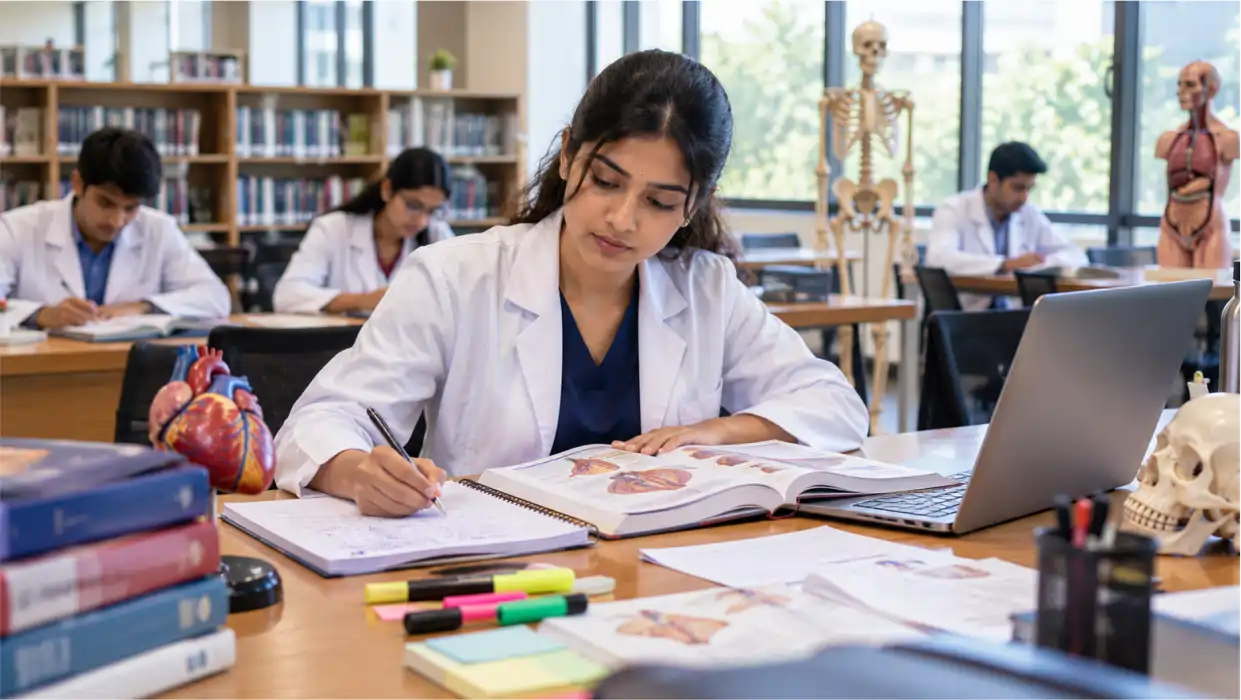
The gap between clearing NEET UG and walking into a medical college classroom is surprisingly short, and the academic jump is significant. School biology, however strong, does not prepare students for the depth and volume of first-year MBBS subjects. Anatomy, physiology, and biochemistry each carry more content than most students anticipate, and the combination across a single year requires a fundamentally different approach to studying than anything that came before. This guide covers what the subjects involve, how to build a study plan that actually holds, and what to expect from the first year of medical training.
The Three First-Year MBBS Subjects
Anatomy
Anatomy is the largest subject in the first year by most measures, with a substantial volume of structures, relationships, and clinical correlations. It covers gross anatomy (the dissection hall), histology (tissue structure under the microscope), embryology (developmental origins of structures), and neuroanatomy. The dissection hall is where first-year medical students spend significant practical time, and building comfort with cadaveric dissection early sets the foundation for clinical reasoning later. The key mistake students make in anatomy is treating it as pure memorisation understanding spatial relationships and clinical relevance helps content stick far better than rote recall.
Physiology
Physiology explains how the body works from membrane potentials and cardiac cycles to renal regulation and respiratory mechanics. It is more concept-driven than anatomy, and students who approach it mechanistically, asking why each process works the way it does, handle it significantly better than those who try to memorise facts in isolation. Physiology also connects directly to pharmacology and pathology in later years, making a solid first-year foundation genuinely valuable rather than just relevant for the first professional exam.
Biochemistry
Biochemistry covers the molecular underpinnings of human function metabolic pathways, enzyme kinetics, genetics, and molecular biology. It is the subject that most students find hardest to retain, partly because its relevance to clinical medicine isn’t always obvious in the first year. Connecting biochemical processes to actual diseases and understanding why enzyme deficiencies cause specific conditions, for example, makes the content far more memorable and clinically useful.
Building a Study Plan That Works
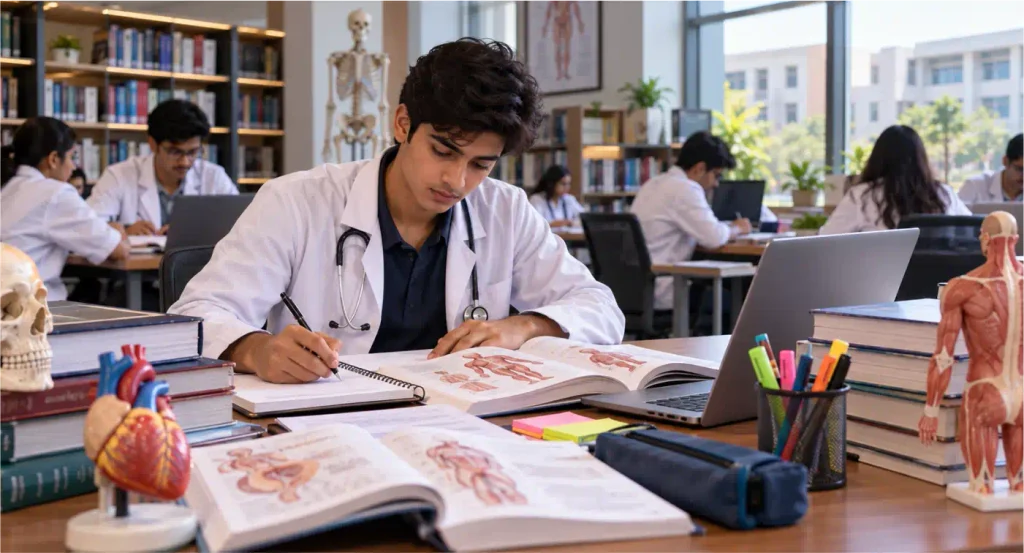
A first-year MBBS study plan for medical students that survives the year has a few consistent features. First, it’s built around the college timetable rather than imposed on top of it. Anatomy practical sessions, physiology lectures, and biochemistry tutorials each make their own demands, and a plan that ignores the weekly schedule collapses within weeks. Second, it allocates specific time to each subject daily rather than rotating subjects on a daily basis. All three subjects require consistent engagement throughout the year, not intensive blocks followed by neglect. Third, it builds in review cycles. New content from anatomy is reinforced within three to five days, then again at the end of the month, using spaced repetition to move information from short-term to long-term retention.
Standard reference texts for each subject are well-established in the Indian medical curriculum. For anatomy: BD Chaurasia’s volumes and Snell’s Clinical Anatomy for conceptual depth. For physiology: Guyton and Hall alongside AK Jain for exam-orientated revision. For biochemistry: Harper’s Biochemistry with Vasudevan for clinical integration. Complementing these with question banks from the third month onwards builds exam familiarity without replacing primary text study.
What to Expect From Life in the First Year
The first year of MBBS at a top medical college in Delhi NCR or anywhere with a functioning teaching hospital campus is intellectually demanding but also genuinely interesting once the initial adjustment period has passed. Dissection hall sessions are scheduled across the week alongside lectures and tutorials. Early morning and evening self-study slots are when the real consolidation happens. Most students find the workload manageable by the third month, once they have established their routines. The difficulty is the first six weeks, when everything is new simultaneously.
Peer study groups work well for physiology and biochemistry, where talking through mechanisms reinforces understanding. Anatomy relies more on individual diagrams, self-testing, and repeated revision of the same regions from different angles, which builds spatial understanding over time.
Preparing Before the First Day
- Read an overview of all three subjects, not in depth, just enough to have a mental map before lectures begin
- Arrange your reference texts before the first week; access to books during the first days of term affects early momentum
- Set up a basic revision system notebook, digital or physical flashcards, before content starts accumulating
- Accept that the first professional exam is over a year away, but the content that determines your performance in it starts building from day one
Conclusion
First-year MBBS is demanding but navigable with a realistic plan built before it begins rather than improvised during it. Students who do well in the first professional exam are rarely the most gifted at NEET. They’re the ones who built consistent study habits early and maintained them across the year. If you’re looking for a college where the academic environment supports that kind of structured learning, visit SIMS University to explore what a first-year MBBS study plan for medical students preparation looks like at SIMS Hapur and how the faculty support new students through the transition.