

For many, the MBBS degree is a hard-won victory. But in the modern medical landscape, it’s just the opening act. If you want to move from “general practitioner” to “specialist,” the crossroads you face are usually dominated by the search for the right MD MS courses in India. It’s not just about getting a seat; it’s about choosing an ecosystem that won’t just hand you a degree but will actually turn you into a surgeon or a consultant who can handle a crisis.
At Saraswathi Institute of Medical Sciences (SIMS) in Hapur, the postgraduate experience is designed to be a “clinical deep dive.” Let’s look at why this matters for your long-term career.
Finding Your Niche: Specialization in the Real World
The variety of Medical PG specialization in India can be dizzying. Do you go for the high-tech, diagnostic precision of Radio-diagnosis? The fast-paced, life-saving environment of Anaesthesiology? Or the intricate, long-term care required in Paediatrics?
At SIMS, the PG seat matrix (currently approved for over 100 seats across 19 departments) is built to mirror the needs of the Indian healthcare system. The clinical departments here aren’t just academic silos; they are high-traffic zones. When you’re an MD candidate in General Medicine or an MS aspirant in Orthopaedics at SIMS, you aren’t just “observing.” You are the first line of defense in the 1,100-bed hospital. This hands-on volume is the only way to build the “clinical instinct” that separates a great doctor from a good one.
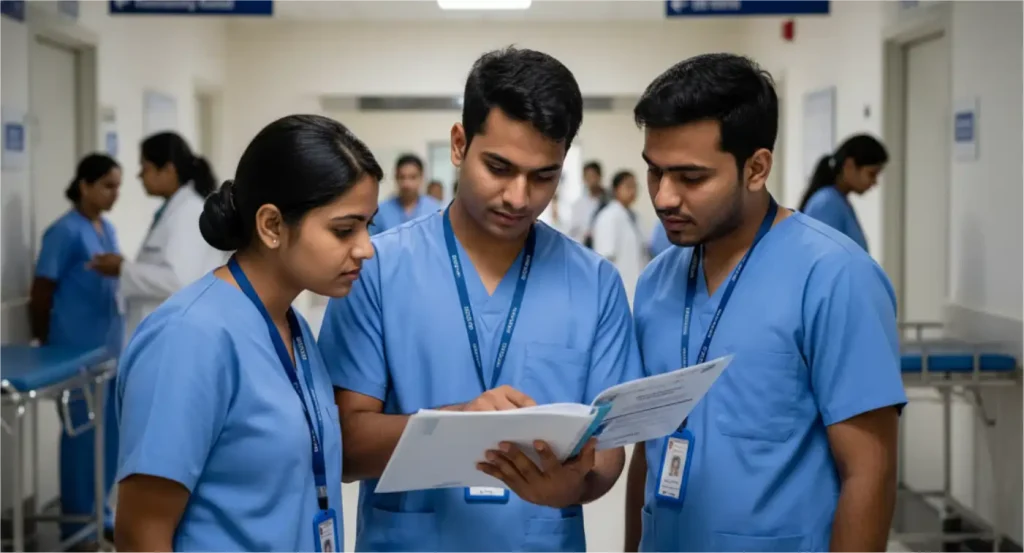
The SIMS Clinical Advantage
In many city-centre colleges, PG residents often find themselves fighting for “hands-on” time because of a heavy lean toward theory. However, the SIMS clinical departments thrive on a massive rural and urban patient inflow from the Hapur and Ghaziabad regions.
If you’re in the MS General Surgery wing, you’re seeing everything from routine appendectomies to complex trauma cases referred from the nearby highways. If you’re in OBG, you’re managing high-risk deliveries in a 100+ bed dedicated maternal unit. The teaching hospital features 11 modular operation theaters and 24/7 emergency services, meaning your learning doesn’t stop at 5 PM. It’s this pro-active residency culture that ensures you leave the campus not just with a certificate, but with a portfolio of procedures you’ve actually performed.
Life and Career After the Specialization
So, what does a career after MD MS in India look like if you’ve trained at SIMS? Because the institute is recognized by the NMC and affiliated with a major university, your degree carries weight in both the government and private sectors.
Many SIMS alumni have moved into senior residency roles in top-tier corporate hospitals in Delhi-NCR, while others have pursued super-specialization (DM/MCh) in highly competitive fields. The stipend structure at SIMS is starting around ₹32,000 for first-year residents, also ensures that while you are learning, you are treated as the professional you already are. Ultimately, specializing here means you’re ready for the “real world” of Indian medicine, where the patients are many, the cases are complex, and the pressure is high.