

If you’re a medical aspirant in India, the year 2026 probably feels like a giant question mark hanging over your head. You’ve likely heard the horror stories about the rising cut-offs and the shifting counselling rules. But behind the stress of the entrance exams, there’s a roadmap that actually works—if you know which turns to take. For those looking at private medical education in the Delhi-NCR belt, the Saraswathi Institute of Medical Sciences (SIMS) is more than just a college; it’s a hub where theory finally meets the hospital floor.
Navigating the 2026 Admission Maze
Let’s be blunt: the MBBS admission process in India isn’t just about how well you know your biology. It’s a logistical marathon. By the time 2026 rolls around, we expect the process to be almost entirely digital, but that doesn’t make it simpler. You start with the NEET-UG, of course, but the real “make or break” moment happens during the state-centralized counselling.
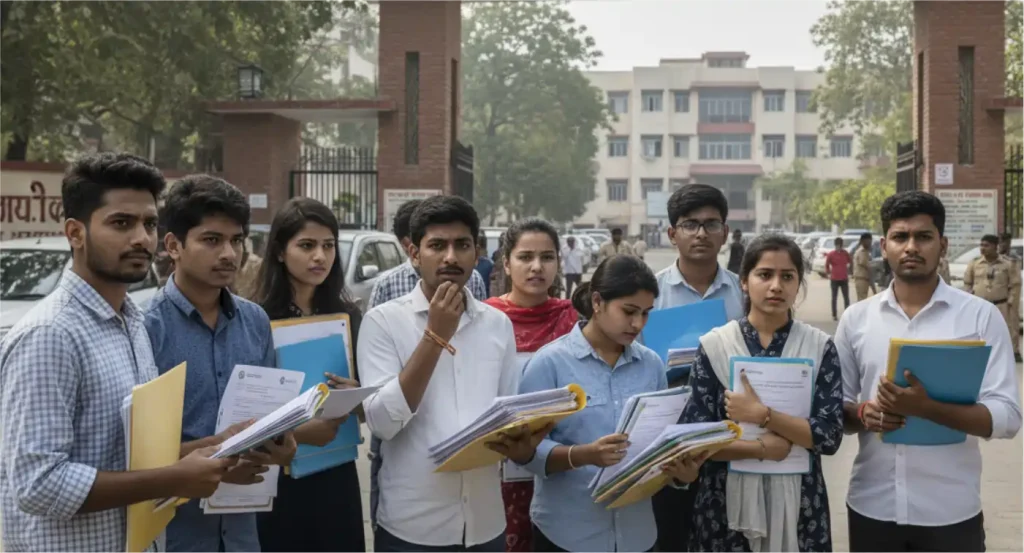
In Uttar Pradesh, this is handled by the UPDGME. You aren’t just competing with ranks; you are competing with choices. If you want to end up at a place like SIMS, you have to be strategic about your registration and document verification. Missing a single upload window or a nodal centre deadline can cost you a year. It’s about being proactive like checking the portal daily and having your “security deposit” ready long before the first round begins.
Cracking the NEET UG Counselling for SIMS
When you sit down for your NEET UG counselling SIMS choice-filling, you’re looking at an institution with a massive 250-seat intake. But don’t let that number make you complacent. SIMS is a preferred choice because of its proximity to Delhi and its 1,100-bed teaching hospital.
The counselling usually moves through three main rounds: the initial allotment, the second upgrade round, and the final mop-up. The “secret” to getting in is understanding your rank’s worth. Historically, closing ranks for SIMS have been competitive, especially for the “Open Category” seats. My advice? Don’t just look at the college name; look at the patient flow. In 2026, where the NEXT exam will likely dictate your future, training at a high-volume center like SIMS gives you the clinical edge that a textbook simply can’t provide.
The Financials: Breaking Down SIMS MBBS Fees 2026
Parents always ask the same question first: “What is the bottom line?” It’s a fair question. Medical school is an investment. For the 2026 session, the SIMS MBBS fees 2026 follows the regulatory structure set by the state. You’re looking at a tuition fee of roughly ₹11,81,671 per year.
However, “fees” is a broad term. To truly plan, you need to account for the first-year essentials. You’ll need to set aside about ₹3,00,000 for the one-time refundable security deposit and another ₹94,160 for miscellaneous charges like library and gym access. Hostel costs typically range from ₹1.73 Lakhs upward depending on whether you opt for an AC room. When you add it all up, the first year is the most expensive hurdle, costing around ₹15.7 Lakhs. After that, the security deposit is out of the way, and you can focus on the learning.
The Verdict
The road to 2026 is going to be intense, but colleges like SIMS offer a clear path forward. If you manage the admission hurdles and the counselling paperwork with a cool head, you aren’t just getting a degree you’re getting a career.