
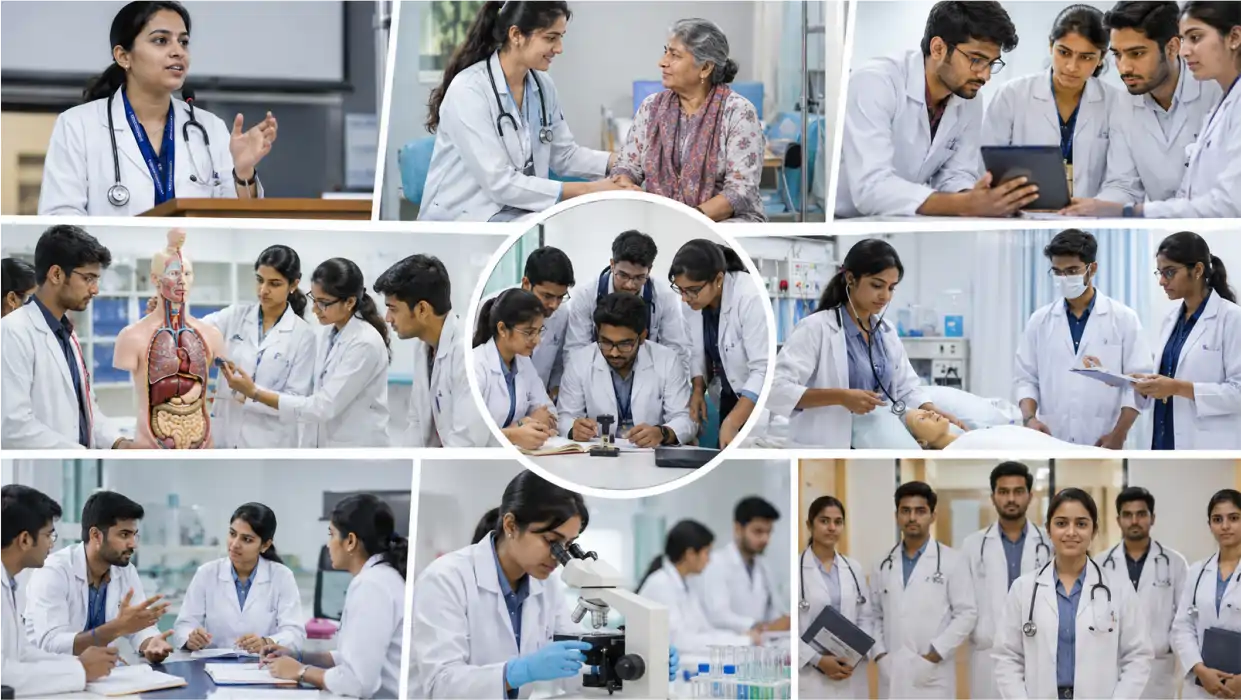
Exams are only part of the picture. The MBBS student skills that actually shape a good clinician’s clinical judgement, procedural competence, and professional resilience build up gradually across all five years, not overnight during internship.
Beyond Textbook Knowledge
Medical schools test knowledge heavily, but what patients actually benefit from goes well past what shows up on a written paper. A student can ace a pathology exam and still struggle to take a focused history, manage their time on a busy ward round, or stay steady during an emergency all things that need actual practice, not just reading. That gap between exam scores and real clinical competence is precisely why structured skills training has become such a central piece of medical education now.
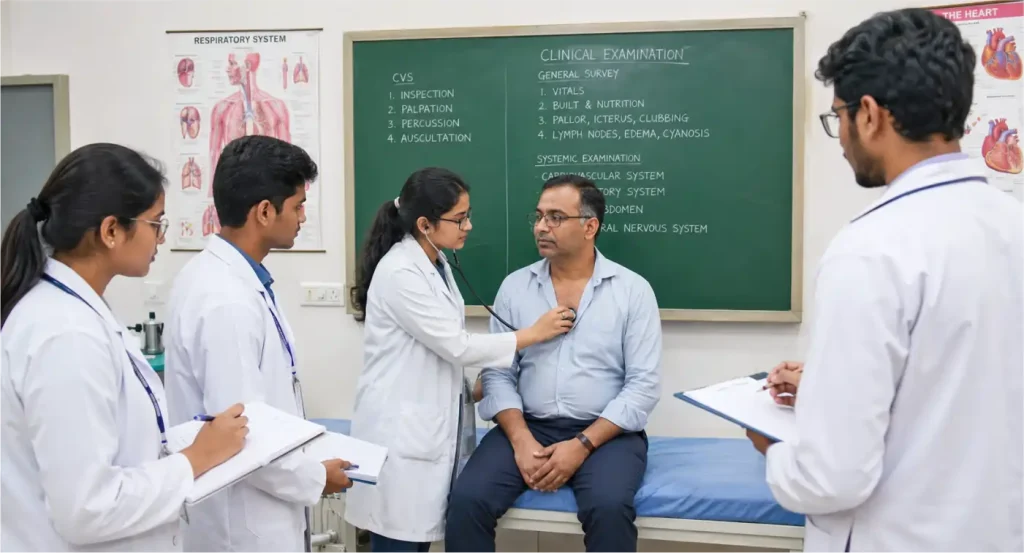
Core Skills Worth Developing Early
- Clinical examination technique: this improves with repetition, not from watching someone else do it
- Clinical reasoning connecting symptoms, history, and findings into something coherent, not pattern-matching on the surface
- Procedural competence: blood draws, suturing, and IV cannulation, built through supervised practice over time, not a single demo
- Time management under real pressure, especially during busy postings and genuine emergencies
- Professionalism and ethics: confidentiality, informed consent, appropriate boundaries
- Resilience and stress management, because medical training and practice both come with sustained emotional weight
- Documentation: clear, accurate notes matter both legally and for continuity of care
How Clinical Skills Training Works
Structured clinical skills training usually starts with simulation mannequins and models, then moves to supervised practice on real patients under close faculty supervision, and finally to more independent work during the internship. That gradual build lets students gain confidence step by step, instead of getting dropped into high-pressure situations unprepared, which cuts both error risk and student anxiety.
Why Soft Skills Matter Alongside Technical Ones
It’s easy to think of “skills” as purely procedural, tutoring, examination, and diagnosis. But things like staying regulated under pressure, adapting when a case doesn’t fit the textbook, and taking feedback without getting defensive matter just as much long-term. Students who build these alongside the technical stuff tend to handle the unpredictability of real practice with a lot more confidence than those who only chase procedural mastery.
Why Choose SIMS Hapur
Our medical education in Hapur leans hard into hands-on skill-building from the early postings onwards, instead of pushing practical exposure off to the final years. Structured faculty feedback on ward rounds, dedicated skills lab time, and steadily increasing clinical responsibility that’s how SIMS students build real competence, not just theory, by graduation. A practical future doctor guide, built into the curriculum rather than left to chance.
Tips for Skill Development
- Go after hands-on opportunities during postings instead of waiting to be handed a task
- Practise documentation regularly. Clear records aren’t an afterthought, they’re a core skill
- Ask for feedback on your examination technique specifically, not just whether your diagnosis was right
- Use simulation labs deliberately, practising procedures before trying them on a real patient
- Reflect honestly on the stressful moments and figure out what would help next time
- Get in the habit of asking “why”, not just memorising the right answer
Conclusion
What skills should MBBS students develop? A mix of clinical reasoning, procedural competence, communication, and resilience built through steady, deliberate practice, not just exam prep. Want to know more about the clinical training structure at SIMS Hapur? Contact our admissions office.