
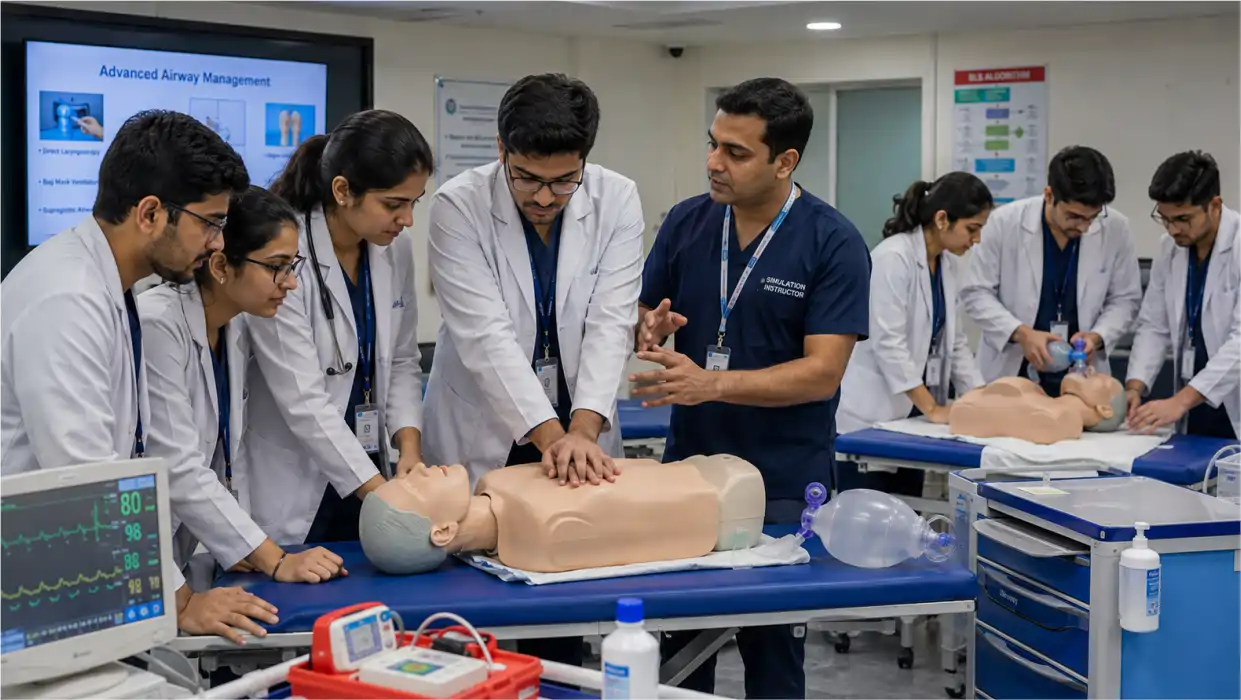
There’s a moment every MBBS student dreads a little. The first time they have to do something on a real patient that they’ve only read about. Simulation-based medical training exists to soften that gap, letting students practise procedures, emergencies, and decision-making on mannequins and models first, so the real thing doesn’t feel like a blind leap.
What Simulation Training Actually Involves
Simulation labs range from basic task trainers’ arms for IV practice, torsos for CPRto high-fidelity mannequins that can simulate a pulse, breathing, even changing vital signs in response to what a student does. Some labs go further with virtual reality modules for surgical steps or emergency scenarios. The common thread is repetition without risk: a student can get a suturing technique wrong ten times on a simulator before ever touching a patient, and nobody’s harmed by that learning curve.
Why Simulation Has Become Central to Medical Training
- Students get to make mistakes and correct them immediately, something that’s far riskier with real patients
- Rare emergencies like cardiac arrest, anaphylaxis, and obstetric complications can be practised repeatedly, since real cases don’t show up on a convenient schedule
- Procedural skills like suturing, intubation, or catheterisation build muscle memory before the pressure of a real patient adds stress to the mix
- Team-based scenarios train communication and coordination during emergencies, not just individual technical skill
- Faculty can pause a scenario midway to explain reasoning, something impossible during an actual emergency
- Students build confidence gradually, encountering high-pressure situations first in a controlled setting rather than for the first time on the ward
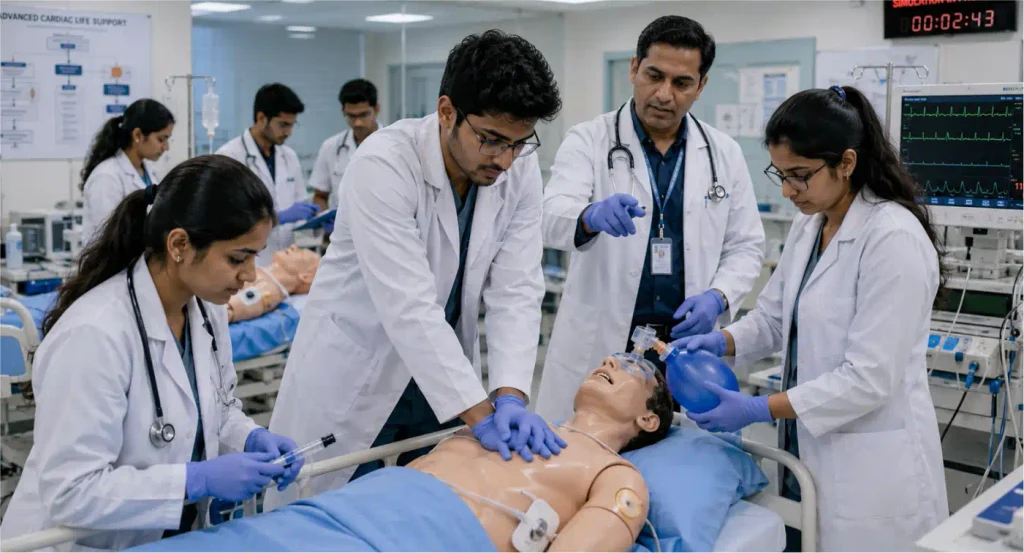
How a Typical Simulation Session Works
A well-run session doesn’t just drop students into a scenario cold. It usually starts with a briefing on what the scenario involves and what’s expected of them, followed by the scenario itself, often recorded on video. Afterward comes debriefing, arguably the most valuable part: faculty and students review what happened, what decisions were made, and why, without the adrenaline of a live situation clouding the reflection. This debrief step is where a lot of the actual learning happens, more than the scenario itself.
Where Simulation Fits Alongside Real Clinical Exposure
Simulation was never meant to replace real patients. It’s meant to prepare students for them. A student who’s practised inserting an IV on a simulated arm twenty times is simply steadier the first time they do it on an actual patient, and that steadiness matters for both the student’s confidence and the patient’s comfort. The same logic applies to emergency scenarios: a student who’s run through a mock cardiac arrest scenario reacts faster and more calmly than one encountering that pressure for the very first time in a real code.
The Technology Behind Modern Simulation Labs
Today’s medical simulation lab in Hapur setups often include programmable mannequins that can simulate abnormal heart sounds, changing oxygen levels, or verbal responses triggered by student actions. Task trainers focus on specific skills, such as suturing a pad, an airway model, and a lumbar puncture simulator, letting students drill a single skill repeatedly without needing a full scenario each time. Some labs also use standardised patients, trained actors who simulate real patient presentations, blending procedural practice with the communication skills a mannequin simply can’t provide.
Why Choose SIMS HapurWhy Choose SIMS Hapur
At our MBBS college in Hapur, the simulation lab isn’t an occasional add-on tucked away for a single semester it’s woven into training across multiple years, from early procedural basics to more complex emergency scenarios closer to clinical postings. At the best medical college in Hapur, faculty run structured debriefs after every session, making sure students walk away understanding not just what they did, but why it mattered, which is where the real value of simulation training tends to live.
Tips for Getting the Most Out of Simulation Training
- Treat scenarios seriously, even knowing it’s not a real patient the habits you build here carry over
- Ask questions during debrief rather than staying quiet, since that’s where most of the actual learning happens
- Practise the same skill multiple times rather than assuming one attempt is enough to build real competence
- Pay attention to team communication during group scenarios, not just your individual technical performance
- Review video recordings of your own sessions if available, since watching yourself often reveals habits you didn’t notice in the moment
- Don’t skip the briefing portionunderstanding the scenario’s goals shapes how much you get out of it
Conclusion
How do simulation labs help MBBS students? By giving them a safe space to fail, adjust, and improve before those same skills matter for a real patient’s safety. To learn more about the simulation facilities and training structure at SIMS Hapur, reach out to our admissions team.